

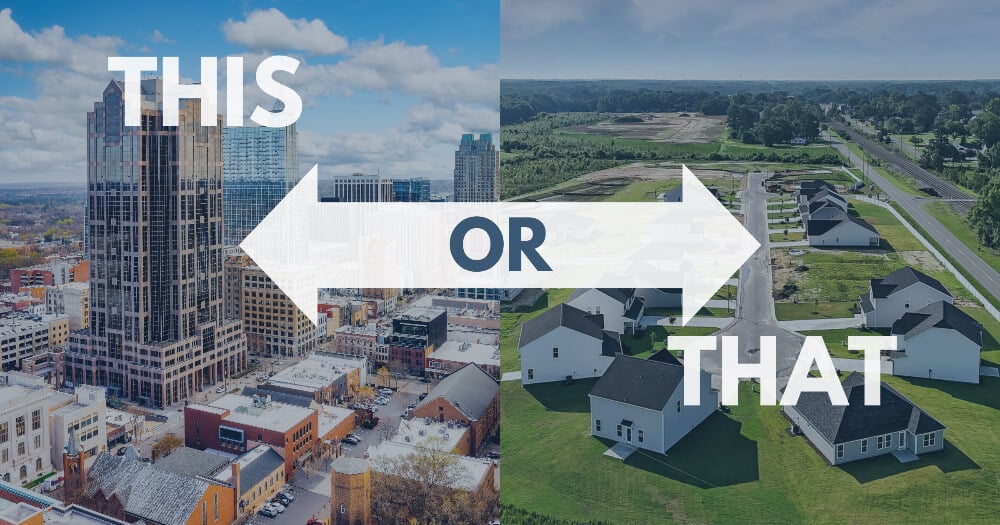
If you are relocating to the Triangle or moving within the Raleigh area, you will hear a lot about Wake County. Raleigh, Cary, Apex, Holly Springs, and Fuquay-Varina get much of the attention.
But in 2026, more buyers are asking a smarter question.
Should we buy in Wake County, or choose Johnston County for more space and a better value while staying close to Raleigh?
This guide breaks down the decision in a practical way. We cover housing costs, commute reality, lifestyle, schools and how to evaluate them, and what growth means for your long-term comfort and resale.
1) Quick decision guide in 60 seconds
Wake County tends to be best if you want:
- Shorter drives to Raleigh, Cary, and RTP depending on the town
- More established amenity density and shopping clusters
- Strong demand in many submarkets
- A more plug-and-play suburban feel
Johnston County tends to be best if you want:
- More home for your budget
- More yard and often more privacy
- New construction value relative to Wake
- More variety in lifestyle options, including planned communities and non-HOA properties
If you are saying, “We want space, a yard, and a monthly payment that does not feel tight,” Johnston County is usually the first place we check.
2) Housing costs: what you pay versus what you get
The biggest difference buyers feel is value.
In many Wake County areas, the same budget may buy:
- A smaller lot
- More competition
- Fewer upgrades unless you stretch
In many Johnston County areas, that same budget may buy:
- More square footage
- More new build options
- Bigger lots or more usable yards
- More flexibility on must-haves like an office, bonus room, or larger garage
How to compare correctly:
Do not compare list price alone. Compare:
- Total monthly cost
- Layout functionality
- Lot and privacy
- HOA costs and what they include
- Age of major systems like roof and HVAC
3) Space and lot size: the difference you notice every day
Wake County neighborhoods often prioritize:
- Sidewalks, amenities, and tighter lots
- Proximity to restaurants and retail
- More planned communities and HOA structure
Johnston County gives you more variety:
- Planned communities with pools and playgrounds
- Established neighborhoods with mature trees
- Non-HOA options
- Acreage and semi-rural properties, which can include well and septic setups
If your lifestyle includes gardening, workshop space, outdoor entertaining, or a fenced yard that feels private, Johnston County can be a better fit.
4) Commute reality: Raleigh, Southeast Raleigh, and RTP
Commute is where buyers either overthink or underestimate.
Here is the simplest way to decide: where do you drive most days?
- Downtown Raleigh
- Southeast Raleigh and Garner
- RTP, Morrisville, and Durham
- Hybrid or remote work with a few office days per week
General pattern to expect:
- Many Johnston County locations work very well for downtown Raleigh and Southeast Raleigh commutes, depending on your exact town and route.
- RTP commutes can be workable for many buyers, especially with hybrid schedules, but location choice matters.
Practical tip:
Before picking a neighborhood, test your commute at:
- 7:30 to 8:30 AM
- 4:30 to 5:45 PM
- Mid-day for errands and school pickups
5) Taxes and monthly payment: what actually affects affordability
Buyers often focus on purchase price and forget the monthly stack:
- Taxes
- Insurance
- HOA dues if applicable
- Utilities, which can change with home size and rural setup
What to do instead:
When comparing Wake vs Johnston, ask for a monthly payment worksheet using:
- The same down payment assumption
- The same interest rate assumption
- Estimated taxes, insurance, and HOA
It is common for Johnston County to feel more comfortable on the monthly payment, especially when you are getting more home for the price.
6) Schools: how to evaluate without getting lost in rankings
School research is emotional and often confusing.
A better approach than rankings alone:
- Identify the schools tied to specific addresses you like
- Compare programs and supports that matter to your child
- Consider commute and daily logistics, not just test scores
- Ask about growth and rezoning patterns if you are buying in fast-growing areas
If you want, we can help you narrow neighborhoods based on your priorities, then you can verify the exact school assignments for each address you consider.
7) New construction: where it is happening and why it matters
If you want a newer home, Johnston County is often where buyers find:
- More inventory at a given price point
- Newer communities with modern layouts
- More predictable maintenance early on
New construction is not automatically better, though. It is about picking the right builder, lot, and plan for your needs.
8) Lifestyle: errands, dining, parks, and the “feel”
Wake County wins on density and convenience in many areas. More restaurants, more shopping clusters, and more established entertainment hubs.
Johnston County wins on:
- Space and quieter neighborhoods
- Small-town downtowns and local events
- Outdoor lifestyle and room to spread out
Many buyers choose Johnston because daily life feels calmer while still keeping Raleigh within reach.
9) Growth: what is changing in Johnston County
Johnston County is growing, and that matters for:
- New roads and infrastructure
- Retail and restaurant growth
- New communities and expanding school capacity
Growth can be a plus if you pick the right location for your commute and your lifestyle.
10) FAQs
Is Johnston County a good place to live near Raleigh?
For buyers who want more space, a lower monthly payment, and a suburban-to-rural lifestyle with Raleigh access, it can be an excellent fit.
Is Wake County better than Johnston County?
Not universally. Wake is often best for proximity and density. Johnston is often best for space and value. The “better” choice depends on commute and lifestyle.
Can I commute to RTP from Johnston County?
Many people do, especially with hybrid schedules. It is important to choose your location carefully and test the drive during rush hour.
11) Next steps: choose faster with a simple filter
If you tell us two things, we can narrow your search quickly:
- Your work location or commute direction
- Your top three must-haves, like budget, bedrooms, yard size, and school priorities
From there, we can recommend the best Johnston County areas that fit your lifestyle, plus a few Wake alternatives so you can compare with confidence. Want a short list of Johnston County neighborhoods based on your budget and commute? Reach out and we will build one.
Check out this article next